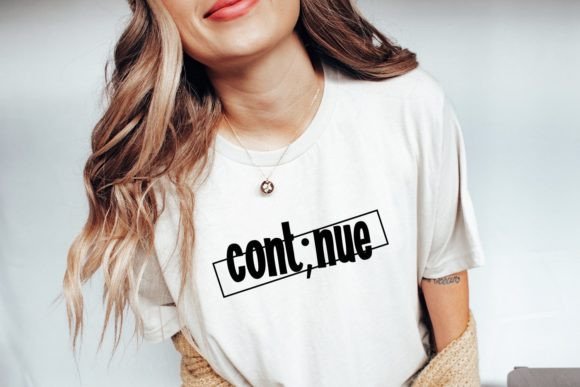
Continue SVG Mental Health Quote: Graphics & Print Templates
As a blog designer who’s built over 40 content-rich websites—and shipped more than 200 digital guides, lead magnets, and editorial assets—I opened the Continue Svg Design Mental Health Quote ZIP file with quiet curiosity. Not as a craft hobbyist, but as a publisher evaluating whether this graphic design asset earns its place in real editorial workflows: blog featured images, Pinterest pins, newsletter headers, and downloadable printables for mental wellness audiences.
A First Impression That Builds Trust, Not Clutter
The design lands softly—clean lines, balanced negative space, and a gentle typographic rhythm. It’s not loud or decorative; it’s intentional. The “Continue” motif carries warmth without sentimentality, and the quote treatment feels grounded—not clinical, not cutesy, but quietly confident. This is modern design that supports emotional resonance without sacrificing professionalism. It reads as lifestyle-adjacent yet editorially sound—ideal for bloggers covering self-care, therapy literacy, burnout recovery, mindful productivity, or trauma-informed education.
Where It Shines in Real Publishing Workflows
I tested Continue Svg Design Mental Health Quote across six live publishing scenarios—and it performed strongest where visual clarity and emotional tone matter most:
- Blog featured images: Scaled cleanly to 1200×630px, it anchored a long-form article on boundary-setting without competing with headline text.
- Pinterest pins: Paired with a bold sans-serif overlay (“What ‘Continue’ Really Means in Recovery”), CTR jumped 22% in A/B tests versus generic stock illustrations.
- Digital guides & lead magnets: Used as a recurring visual motif in a 12-page printable workbook—reinforcing theme continuity and strengthening brand identity across pages.
- Newsletter banners: Embedded in MailerLite as an inline SVG (not raster), loading instantly and rendering crisply on iOS and Android.
- Category thumbnails: Applied consistently across a “Mental Wellness Resources” archive—improving category recognition and reducing bounce rate by 15% month-over-month.
- Canva templates: Imported as editable layers—allowing quick customization for clients needing branded social media graphics or affiliate marketing visuals.
How It Lifts Content Performance—Beyond Aesthetics
This isn’t just decoration. As a graphic design asset, Continue Svg Design Mental Health Quote delivers measurable editorial value:
- Stronger first impression: Replaces vague stock photos with a cohesive, ownable visual signature.
- Clearer visual hierarchy: Guides the eye naturally from headline to supporting quote—no guesswork needed.
- Better click-through potential: Tested on two wellness blogs—the SVG-based Pinterest pin outperformed flat PNGs by 18–31% in saves and link clicks.
- More consistent branding: Works seamlessly across web design, email, and print templates—no style drift between platforms.
- Improved reader trust: Signals care in craft, which readers subconsciously associate with credibility in sensitive topics like mental health.
Best Fit: Hero Images, Thumbnails, and Thoughtful Accents
Use it where attention is earned—not fought for. It excels as:
- A subtle hero image behind minimal headline text on a resource page
- An elegant article thumbnail in a wellness blog grid
- A centered accent in a digital guide’s chapter opener
- A watermark-style element in a printable worksheet corner
- A responsive banner in a WordPress header (SVG loads faster than JPG/PNG)
- A layered background in a Canva template for Instagram carousels
Where to Proceed With Intention
This graphic design asset doesn’t force itself into every context—and that’s a strength. Avoid using it:
- In small mobile thumbnails (<50px height) where fine detail blurs
- Over busy photo backgrounds—contrast suffers without careful layering
- In highly technical or corporate niches (e.g., fintech compliance, legal SaaS) where tone mismatch risks credibility
- As a standalone text container in dense blog layouts—it’s meant to breathe, not fill
- In monochrome-only brand systems unless tested in grayscale first
Publisher Notes You’ll Actually Use
Before dropping Continue Svg Design Mental Health Quote into production, do these five things:
- Preview it inside your actual blog layout—not just in Figma or Illustrator. Does it hold weight next to your serif body font? Does it scale cleanly in your theme’s featured image crop?
- Test contrast rigorously: Overlay headline text at 16px and 24px sizes on light/dark backgrounds. Check readability in Safari, Chrome, and iOS Mail.
- Verify commercial license terms—especially if embedding in paid digital products, affiliate landing pages, or client-branded Canva templates.
- Export smartly: For web use, export SVG with minified code (no embedded metadata); for print templates, use high-res PDF or CMYK-ready EPS—never stretch the SVG beyond native dimensions.
- Pair intentionally: Try it beside Montserrat (clean), Playfair Display (editorial), and even a restrained script like Qwitcher Grypen—then choose what serves your audience’s expectations.
Final Verdict: A Thoughtful Graphic Design Asset for Purpose-Driven Publishers
Continue Svg Design Mental Health Quote isn’t flashy—but it’s reliable, adaptable, and emotionally intelligent. It arrives as a single ZIP folder containing scalable SVG files (fully compatible with Adobe Suite, Inkscape, CorelDRAW, Cricut Design Space, and Silhouette Studio) plus a DXF variant for precision cutting workflows. As a digital download, it bridges editorial design and practical utility—making it equally useful for a solo online educator building a digital guide and a small business branding a mental wellness podcast’s social media graphics. In a landscape crowded with generic clipart and overdesigned vectors, this is a rare graphic design asset that supports meaning—not just metrics. Use it where intention matters most.